
Loading cart contents...
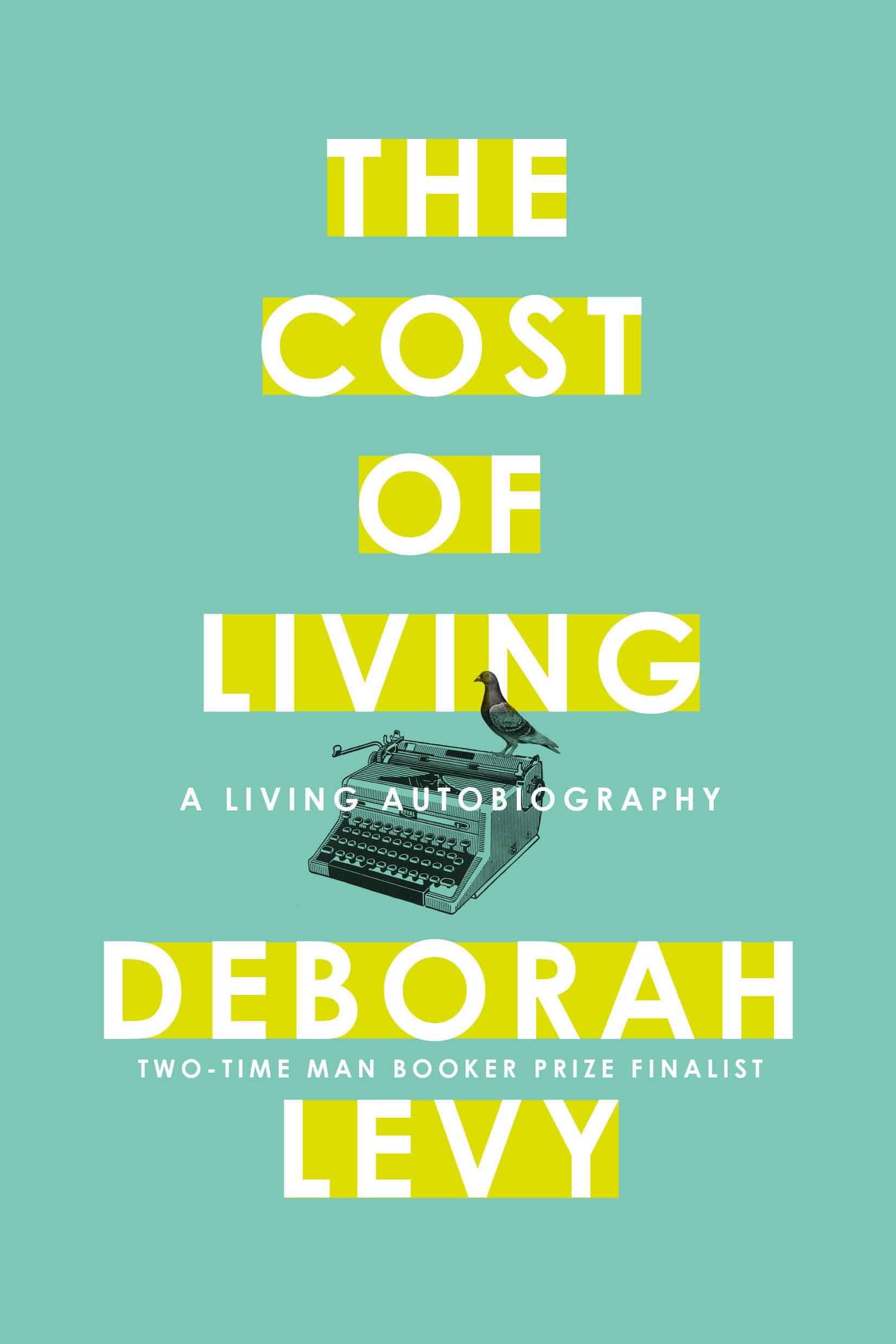
The Cost of Living: A Living Autobiography
17.00 JOD
Please allow 2 – 5 weeks for delivery of this item
Add to Gift RegistryDescription
A New York Times Notable Book of 2018Longlisted for the 2019 Andrew Carnegie Medal for Excellence in NonfictionFrom the twice-Booker-shortlisted author comes a witty and audacious examination of writing and womanhood”Life falls apart. We try to get a grip. We try to hold it together. And then we realize that we don’t want to hold it together.”Crystalline, witty and audacious, The Cost of Living addresses itself to the dual experiences of writing and of womanhood, examining what is essential in each. Following the acclaimed Things I Don’t Want to Know, which reflected deeply on the nature of gender politics and a life in letters, The Cost of Living returns to the same subject and to the same life, to find a writer in radical flux. If a woman dismantles her life, expands it and puts it back together in a new shape, how might she describe this new composition? “Words have to open the mind. When words close the mind you can be sure that someone has been reduced to nothingness.” In this elegiac second instalment of her “living autobiography”, Deborah Levy considers what it means to live with value and meaning and pleasure. The Cost of Living is a vital and astonishing testimony, as distinctive, wide-ranging and original as Levy’s acclaimed novels.
Additional information
| Weight | 0.31 kg |
|---|---|
| Dimensions | 1.83 × 13.97 × 21.06 cm |
| PubliCanadanadation City/Country | Canada |
| Author(s) | |
| Format Old` | |
| Language | |
| Pages | 208 |
| Publisher | |
| Year Published | 2018-8-21 |
| Imprint | |
| ISBN 10 | 0735236518 |
| About The Author | DEBORAH LEVY is the author of six novels: Beautiful Mutants, Swallowing Geography, The Unloved, Billy and Girl, Swimming Home and Hot Milk. Both Swimming Home and Hot Milk were shortlisted for the Man Booker Prize. Her short story collection, Black Vodka, was nominated for the International Frank O'Connor short story award and was broadcast on BBC Radio 4, as were her acclaimed dramatizations of Freud's iconic case studies, Dora, and The Wolfman. Levy has written for The Royal Shakespeare Company, and her pioneering theatre writing is collected in Levy:Plays 1. Levy was an AHRB Fellow at the Royal College of Art. The first volume of her memoir on writing, gender politics and philosophy is Things I Don't Want to Know. |
On GQ's list of "110 best books to read right now" “What is wonderful about this short, sensual, embattled memoir is that it is not only about the painful landmarks in her life—the end of a marriage, the death of a mother—it is about what it is to be alive. I can’t think of any writer aside from Virginia Woolf (or, perhaps, Helen Simpson) who writes better about the liminal, the domestic, the non-event, and what it is to be a woman…This is a little book about a big subject. It is about how to ‘find a new way of living’. Rage is brewing just beneath its surface…I read this book with indecent speed and greed, but it deserves to be read at a pace closer to lived time…Levy knows how to share her story… An eloquent manifesto for what Levy calls ‘a new way of living’ in the post-familial world.” —The Guardian“A flinty and moving memoir . . . [Levy] reclaims herself from the “societal story” that has denied middle-aged women the right to revel in the same appetites and desires as their younger selves. Her route to freedom comes through renewed dedication to her craft while enduring the privations of a damp garden shed, enjoying her peregrinations on an electric bike, tending to herself and her needs.” —The Globe and Mail“Utterly spectacular…” —Toronto Star“[Levy] is an indelible writer…[an] elliptical genius…The Cost of Living…is always a pleasure to consume.” —Dwight Garner, The New York Times“This is a writer who has found her voice and her subject, and both speak directly to our times.” —Los Angeles Times“Keen and moving…This timely look at how women are viewed (and often dismissed) by society will resonate with many readers, but particularly with those who have felt marginalized or undervalued.” —Publishers Weekly (starred review) “Wise, subtle and ironic, Levy is a brilliant writer… Each sentence is a small masterpiece of clarity and poise. That shed should be endowed with a blue plaque.” —The Telegraph“[Levy is] like an expert rafter, and the river she travels is full of encounters and emotions.” —The New York Times “For writing this good, the cost of living is plainly the right price to pay.” —NPR“Powerful.” ―O, the Oprah Magazine“I can't think of any writer aside from Virginia Woolf who writes better about what it is to be a woman.” ―Observer“Levy’s voice has a gentle power that’s rare and wonderful to read…she’s vulnerable but she’s also empowered…Experiencing The Cost of Living for the first time…I forgot I was reading. And that’s what great writing does. It immerses you, fills you like an intravenous drug. Reading becomes a form of living.” —The Quietus “[Levy is] a master of puns and pithy, surprising twists, often deployed at her own expense…Aphorisms that would usually be heavy-handed…breeze past; only later do you realize you’ve been self-helped.” —The New Republic “A powerful, reflective book that gets under the skin of contemporary prejudices and reveals them for what they are, as present now as they ever were.” —Elephant.art“The book’s fragmentary form suits its subject. [Levy] is documenting the impact of dismantling a home, packing up a life, and this has the effect of flipping time into a ‘weird shape’…Funny and wise, Levy is the perfect guide through the complexities and contradictions of her new reality.” —Irish Independent“[Cost of Living] delves into the nuances of writing and womanhood with an enlightening voice that is bound to educate any reader. . . .It’s a leading contemporary essay on feminism and upon the turn of each page, you’ll find yourself gaining more understanding of how to balance meaning with pleasure.”―GQ“The Cost of Living is unclassifiable, original, full of unexpected pleasures at every turn. Though it can be read in a flash, I suspect readers will want to savor this book slowly, for its many moments of insight, humor, wisdom, and surprise. Delivered in gorgeous, disciplined prose, Deborah Levy has crafted a bracing, searing inquiry into one woman’s life that manages to tell the truth of all women’s lives. I loved it.” —Dani Shapiro, author of best-selling memoirs Slow Motion and Devotion “An elegant, candid meditation on the fraught journey to self-knowledge.” —Kirkus Reviews “Beautiful, elegiac . . . The power of words to bestow life after death, and the importance of choosing what is living over what is dead, are at the heart of Levy’s exquisite prose.” —The Spectator“A robust piece of writing about what gives humans purpose . . . It is a heady, absorbing read.” —The Evening Standard “[A] beautiful yet damning indictment of how our culture effaces women’s creative voices, both directly and insidiously.” —Library Journal “In this evocative and insightful memoir, Levy describes her new freedom, in all its complexity and drudgery, and examines how society’s expectations can define and confine women . . . Levy deftly relates the circumstances of her new life with a bewitching combination of wit and pathos.” —Booklist “Slim and spare but highly evocative and allusive, this account of a year in her life — leaving her husband, nursing her dying mother, writing the novels that will change her life — is part of an ongoing project of ‘working autobiography,’ asking and answering the question of how a woman writer should exist in the 21st century.” —Vulture“What makes Levy remarkable, beyond the endless pleasures of her sentences, is her resourcefulness and wit. She’s ingenious.” —New Statesman “Searching for something to read after devouring Women and Power? Known for her piquant novels, Deborah Levy now takes to non-fiction, with a 'working autobiography' that comprises thoughtful dissections of life as a woman.” —Elle Magazine, “Here Are the 21 Books We're Most Excited to Read in 2018” “Levy describes women’s often thankless homemaking enterprise as ‘an act of immense generosity’. It is also a perfect description of this truly joyous book.” —Irish Times “The result is extraordinary and beautiful. Ranging widely and deeply over marriage, motherhood, love, death and friendship, it is a work suffused with fierce intelligence, generous humanity and razor-sharp insights…Serious, playful, considered and provocative, The Cost of Living is a glorious successor to Things I Don’t Want to Know, an affirmation of the art of living as much as an exploration of its costs.” —Financial Times“Each anecdote [is] as luminous, self-contained and hard as the pearls in the necklace she habitually wears around her throat. There's humor here and vulnerability…But above all, The Cost of Living is a smart, slim meditation on womanhood informed by Levy's wide reading. Simone de Beauvoir, Emily Dickinson, James Baldwin, Virginia Woolf — they're just some of the Wise Ones Levy looks to for pointers about how a woman can be, once she has stepped out of her normative role or, as Levy puts it, once she is no longer ‘married to society.’” —NPR “Levy’s vulnerability and uncertainty . . . makes her writing so bold and endearing to read . . . She has a shrewd observer’s eye, which leads to some canny, enjoyable studies of friends and strangers alike and reminds the reader of her strengths as a novelist . . . Levy has a playwright’s knack for conjuring rich detail using incredibly spare and precise language . . . [The Cost of Living] is a very slim volume but you should make time and come prepared to savour every phrase.” —Charlotte Graham-McLay, The Spinoff“[The Cost of Living is] beaded with glorious cameos and returns to the question of narrating one’s own life, advocating the joy of making a new story when an old one concludes…The Cost of Living circles through the narrator’s writing and reading, especially the work of Simone de Beauvoir, to a vision of walking…towards a home made to please herself, full of writing and love, empty of regret.” —The Australian “‘Being alone doesn’t suit you nearly as much as you think it does,’ a male friend tells Deborah Levy rather patronizingly…But he is wrong. Being alone, and what [she goes] through to get there, suits [her, and she is] fascinating in the telling.” —Image Magazine“A short, sharp memoir that ranges across motherhood, writing, art, life, transformation, and everything in between…I devoured in one sitting.” —ArtsHub “A memoir of a woman creating a new life after divorce and a collection of insightful musings on femininity, motherhood, and the craft and discipline of writing.” —Lilith Magazine“How thrilling to read this vivid account by a brilliant woman leaving the marital and maternal we for scary freedom in the land of I. I loved this book!” —Honor Moore, author of Red Shoes, Darling, and Memoir “A tender, vulnerable book with a fierce strength and intelligence at its core. We sense the courage and honesty Levy required to submerge herself, breath held, fully in the past in order to find her way into a new, altered present.” —Nadja Spiegelman, author of I'm Supposed to Protect You from All This“The writing’s gorgeous and pointed, irresistible to dive into. But it’s the ideas that make this such a compelling and provocative page-turner…This book is many things — edifying, emotional, delicate — but it is not indulgent. It’s so sharp and affecting and filled with wisdom that, just maybe, you’d be fine if it were.” —Entertainment Weekly“[A] beautifully written rumination on what it means to be a writer and a woman.” —Mashable |
|
| Excerpt From Book | As Orson Welles told us, if we want a happy ending, it depends on where we stop the story. One January night I was eating coconut rice and fish in a bar on Colombia’s Caribbean coast. A tanned, tattooed American man sat at the table next to me. He was in his late forties, big muscled arms, his silver hair pinned into a bun. He was talking to a young English woman, perhaps nineteen years old, who had been sitting on her own reading a book, but after some ambivalence had taken up his invitation to join him. At first he did all the talking. After a while she interrupted him. Her conversation was interesting, intense and strange. She was telling him about scuba-diving in Mexico, how she had been underwater for twenty minutes and then surfaced to find there was a storm. The sea had become a whirlpool and she had been anxious about making it back to the boat. Although her story was about surfacing from a dive to discover the weather had changed, it was also about some sort of undisclosed hurt. She gave him a few clues about that (there was someone on the boat who she thought should have come to save her) and then she glanced at him to check if he knew that she was talking about the storm in a disguised way. He was not that interested and managed to move his knees in a way that jolted the table so that her book fell to the floor. He said, ‘You talk a lot don’t you?’ She thought about this, her fingers combing out the ends of her hair while she watched two teenage boys selling cigars and football shirts to tourists in the cobbled square. It was not that easy to convey to him, a man much older than she was, that the world was her world too. He had taken a risk when he invited her to join him at his table. After all, she came with a whole life and libido of her own. It had not occurred to him that she might not consider herself to be the minor character and him the major character. In this sense, she had unsettled a boundary, collapsed a social hierarchy, broken with the usual rituals.She asked him what it was that he was scooping up from his bowl with tortilla chips. He told her it was ceviche, raw fish marinated in lime juice, which was written in the menu in English as sexvice – ‘It comes with a condom,’ he said. When she smiled, I knew she was making a bid to be someone braver than she felt, someone who could travel freely on her own, read a book and sip a beer alone in a bar at night, someone who could risk an impossibly complicated conversation with a stranger. She took up his offer to taste his ceviche, then dodged his offer to join him for a night swim in an isolated part of the local beach, which, he assured her, was ‘away from the rocks’. After a while, he said, ‘I don’t like scuba-diving. If I had to go down deep, it would be for gold.’ ‘Oh,’ she said. ‘It’s funny you say that. I was thinking my name for you would be the Big Silver.’ ‘Why Big Silver?’ ‘It was the name of the diving boat.’ He shook his head, baffled, and moved his gaze from her breasts to the neon sign for Exit on the door. She smiled again, but she didn’t mean it. I think she knew she had to calm the turbulence she had brought with her from Mexico to Colombia. She decided to take back her words.‘No, Big Silver because of your hair and the stud above your eyebrow.’ ‘I’m just a drifter,’ he said. ‘I drift about.’ She paid her bill and asked him to pick up the book he had jolted to the floor, which meant he had to bend down and reach under the table, dragging it towards him with his foot. It took a while, and when he surfaced with the book in his hand, she was neither grateful nor discourteous. She just said, ‘Thanks.’ While the waitress collected plates heaped with crab claws and fish bones, I was reminded of the Oscar Wilde quote ‘Be yourself; everyone else is already taken.’ That was not quite true for her. She had to make a bid for a self that possessed freedoms the Big Silver took for granted – after all he had no trouble being himself. You talk a lot don’t you? To speak our life as we feel it is a freedom we mostly choose not to take, but it seemed to me that the words she wanted to say were lively inside her, mysterious to herself as much as anyone else. Later, when I was writing on my hotel balcony, I thought about how she had invited the drifting Big Silver to read between the lines of her undisclosed hurt. She could have stopped the story by describing the wonder of all she had seen in the deep calm sea before the storm. That would have been a happy ending, but she did not stop there. She was asking him (and herself ) a question: Do you think I was abandoned by that person on the boat? The Big Silver was the wrong reader for her story, but I thought on balance that she might be the right reader for mine. |
Only logged in customers who have purchased this product may leave a review.
Related products
-
![]()
On backorder 2-5 Weeks to Arrive
Add to Gift Registry13.00 JOD -
![]()
On backorder 2-5 Weeks to Arrive
Add to Gift Registry20.00 JOD -
![]()
On backorder 2-5 Weeks to Arrive
Add to Gift Registry15.00 JOD -
![]()
On backorder 2-5 Weeks to Arrive
Add to Gift Registry18.99 JOD



Reviews
There are no reviews yet.